The Return of the Conversation Pit
There was a time when homes were designed not just to impress people — but to gather them. Long before oversized kitchen islands, minimalist interiors, and television-centered living rooms became the norm, there was another architectural feature quietly shaping how people interacted inside the home: the conversation pit.
Where the Conversation Pit Began
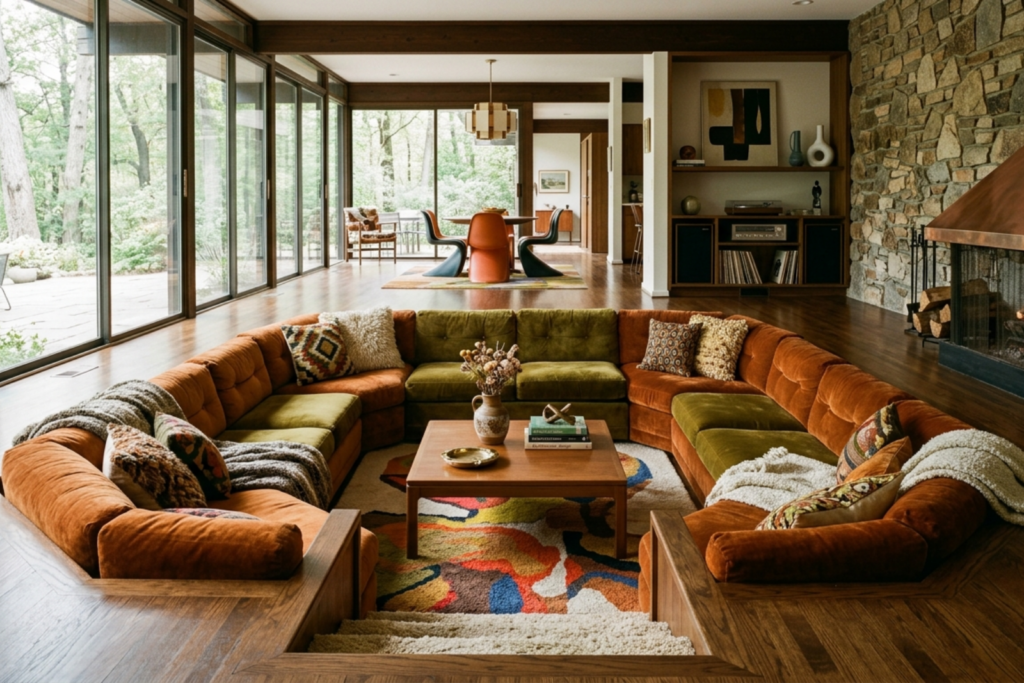
Conversation pits first gained popularity during the late 1960s and became iconic throughout the 1970s, emerging during a time when architecture and interior design were undergoing major cultural change.
Homes were becoming more social, more open, and more experiential. Rather than formal sitting rooms designed for appearance, architects began creating spaces intended for gathering, entertaining, and connection.
Unlike the rigid layouts of previous decades, conversation pits encouraged people to settle in, linger longer, and interact face-to-face. They symbolized a softer and more relaxed version of luxury — one centered around atmosphere rather than formality.
The Shift Toward Efficiency & Screens
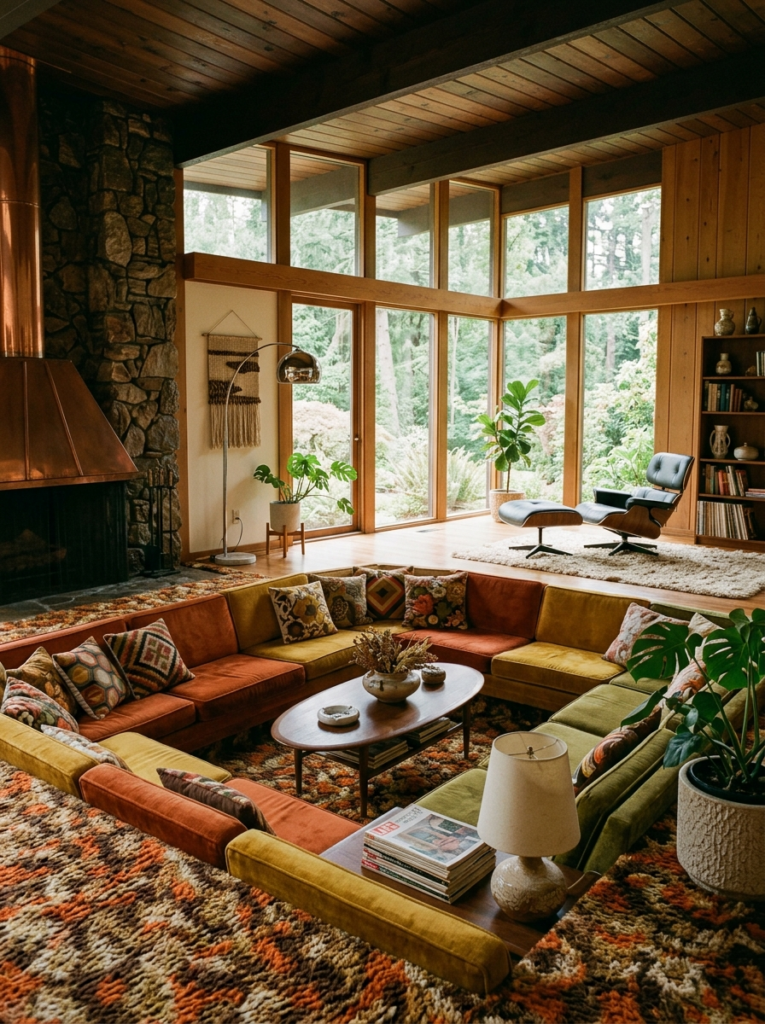
Despite their popularity throughout the 1970s, conversation pits gradually faded as interior trends moved toward cleaner, more standardized layouts.
Television became the focal point of living rooms. Furniture arrangements changed. Practicality began replacing experimentation, and homes increasingly prioritized efficiency over atmosphere.
Minimalism eventually pushed many of these spaces out entirely, with countless original conversation pits filled in during renovations throughout the 1980s and 1990s.
Yet despite disappearing physically, the emotional idea behind them never truly went away.
Why They’re Suddenly Returning
Today, conversation pits are returning for reasons that go far beyond aesthetics.
After years of ultra-sterile interiors and technology-heavy lifestyles, people are craving spaces that feel warmer, softer, and emotionally grounded.
Homes are increasingly being designed around atmosphere and human experience once again — and conversation pits naturally support that shift.
In many ways, they represent a reaction against digital fatigue and detached living. They encourage presence. They encourage gathering. They encourage people to slow down.
Where We’re Seeing Them Reappear
While conversation pits are not yet mainstream, they are rapidly resurfacing in design-forward homes and luxury architecture.
Los Angeles, Palm Springs, boutique hotels, luxury Airbnbs, and custom architectural builds are all embracing modern versions of the sunken living room.
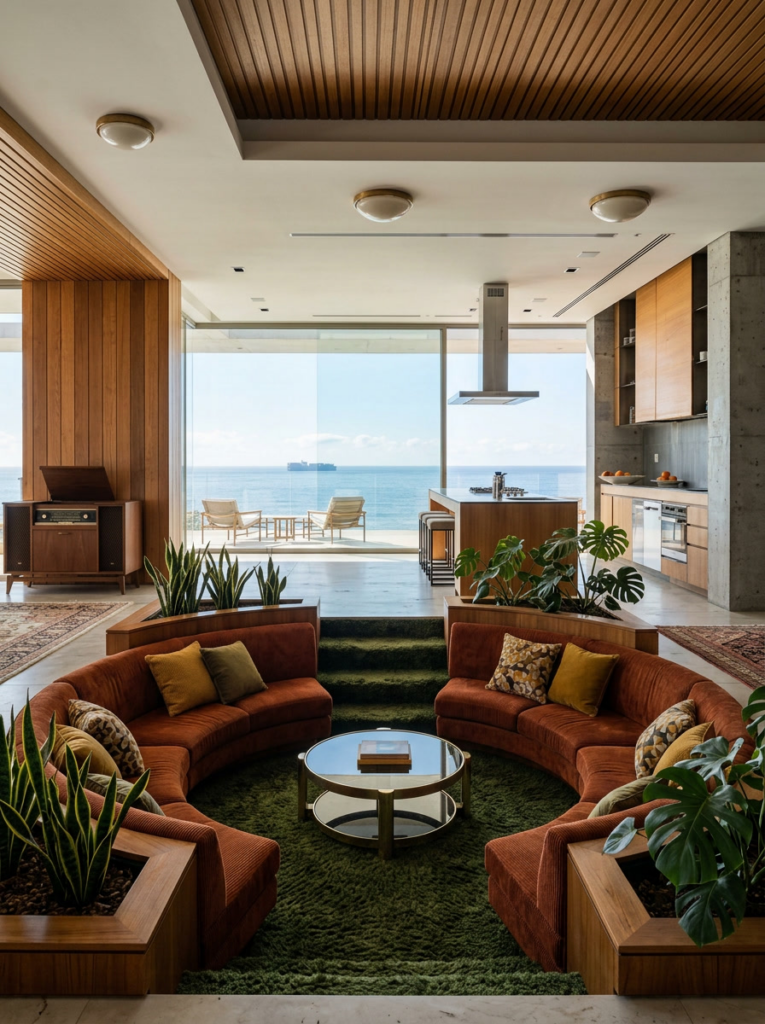
Today’s versions feel less retro and more sculptural — featuring curved seating, layered neutrals, natural stone, soft textures, and quiet luxury aesthetics.
Why Lowered Spaces Feel So Intimate
Conversation pits influence human behaviour in subtle but powerful ways.
Lowered seating naturally creates a sense of enclosure, comfort, and emotional grounding. People instinctively face inward, conversations become more focused, and the atmosphere feels calmer and more personal.
In many ways, conversation pits create something modern homes often struggle to achieve naturally: intimacy within open space.
In a world increasingly defined by distraction, spaces that encourage people to slow down become incredibly powerful.
Are Conversation Pits Practical Today?
While undeniably beautiful, conversation pits still raise important conversations around practicality, accessibility, safety, and resale.
Modern interpretations often soften the original concept with subtle level changes and more adaptable layouts, allowing designers to preserve the emotional feeling without sacrificing functionality.
Whether they become a lasting architectural staple again remains to be seen — but their emotional impact is undeniable.

The Home as Connection
Design trends rarely exist in isolation. They reflect cultural shifts, emotional needs, and the ways people want to live.
The return of the conversation pit says something powerful about this moment in time: people are craving warmth again. Slower living. Intentional entertaining. Spaces designed not just for appearance — but for presence.
In a world increasingly dominated by distraction and digital noise, perhaps it’s no surprise that homes are beginning to prioritize something simpler once again: gathering face-to-face.