Chattels vs. fixtures in BC: what stays when a home sells?
Chattels are movable personal belongings. Fixtures are items that have become part of the property through their attachment and purpose. When a home is sold in British Columbia, fixtures generally remain and chattels generally go with the seller, subject to the terms of the Contract of Purchase and Sale.
Furniture and a decorative wall clock are familiar examples of chattels. Built-in kitchen cabinetry and installed plumbing are familiar examples of fixtures. The agreement records the inclusions and exclusions for the particular home.
A cabinet and a clock
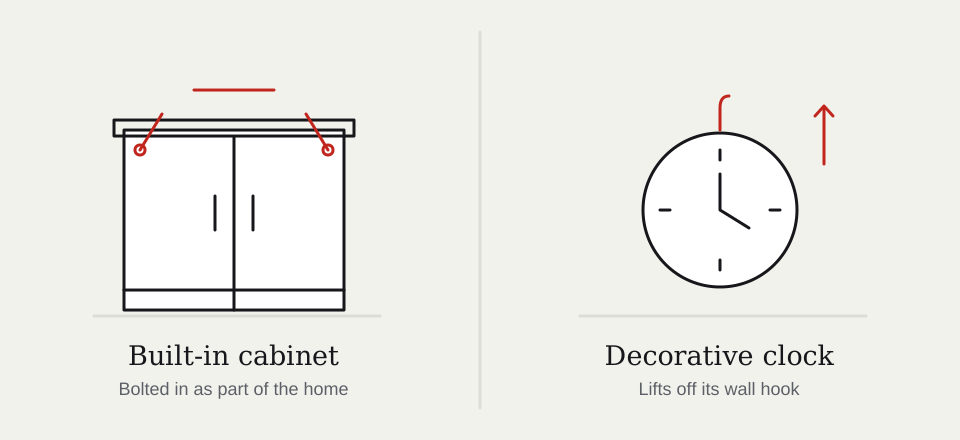
A built-in cabinet bolted to the wall as a permanent part of a kitchen is generally a fixture. Its attachment and purpose both point to it being part of the home.
A decorative clock that hangs on a hook and can be lifted off is generally a chattel. The hook supports the clock for display; it does not ordinarily make the clock part of the building. A picture hanging from a wall hook is a similar example.
The distinction is about more than the presence of a screw. A freestanding cabinet secured only to prevent tipping may need a different assessment from cabinetry built into the room. How an item is attached and why it is there should be considered together.
What commonly stays with the home?
Built-in cabinetry, sinks, taps and installed light fittings are typical fixtures. Movable furniture, rugs and countertop appliances are typical chattels. These are starting points; the installation and the signed agreement matter.
Some items deserve a specific conversation during the offer:
- Appliances. Identify the refrigerator, range, washer, dryer and any other appliances being included. A freestanding appliance can be included by agreement even though it is movable.
- Televisions and brackets. Specify the television and wall bracket separately, along with any agreed removal and wall repairs.
- Window coverings. Address curtains, blinds, rods and tracks expressly rather than treating them as one item.
- Central vacuum systems. Identify the installed system and whether hoses, cleaning heads and other accessories are included.
- Outdoor equipment. Clarify hot tubs, sheds, planters and garden ornaments. Installation methods vary.
- Smart-home equipment. Identify doorbells, cameras, thermostats and EV chargers. Confirm ownership, required hubs, account transfers and any ongoing service costs.
How the contract records what stays
The Contract of Purchase and Sale sets out the agreed terms. Its included-items wording should be reviewed alongside any added inclusions, exclusions and schedules.
An item appearing in a photograph, a showing or an MLS listing is not a substitute for recording the agreement in the contract. BCFSA advises that appliances and other chattels advertised as inclusions must be properly addressed in the purchase agreement.
For example, a seller may wish to retain a dining-room chandelier. That exclusion should be discussed early and recorded in the contract if agreed. If a replacement fitting will be supplied, its description, installation and any repairs should also be agreed in writing.
For a valuable appliance or a home with several similar items, a location, make, model or serial number can help identify exactly what is included. Your REALTOR® can help record the negotiated terms and identify matters that need legal advice.
Before you make an offer
Walk through the home with the inclusions in mind. Tell your REALTOR® which items you would like to keep, including accessories and remotes. Review the written list before signing, and ask about ownership and the condition of included equipment.
Installed equipment may be leased or financed. Confirm whether the seller owns it outright and how any lease, financing or service agreement will be dealt with. Physical attachment alone does not establish ownership or transfer a subscription.
Before you list your home
Let your REALTOR® know about any fixtures you plan to retain, particularly sentimental light fittings or other installed pieces. Discuss whether to remove and replace them before photography and showings, or identify them as proposed exclusions. Ensure the final agreement reflects the terms accepted by both parties.
Once the contract is signed, use its inclusions and exclusions as the reference when preparing for possession. Keep agreed accessories together and arrange any promised replacement or repair work. Changes to the agreement should be documented with professional guidance.
Planning your next move?
We can walk through the details with you, from the built-in cabinetry to the items you would like included in your offer. Explore our buying guide, learn about selling your home, or speak with our team.
Further reading
- BCREA: the extent and purpose of attachment
- BCFSA: included chattels in a Contract of Purchase and Sale
- Canadian Bar Association: leased and financed fixtures and chattels
General information for residential buyers and sellers in British Columbia. Classification depends on the facts and the contract. Ask your REALTOR® about your transaction and a lawyer for legal advice.